

Cost and Performance: The Wrong Finish Line
A finish line is a promise. It is the one fixed point a race offers a runner, the assurance that effort has a boundary, that the lungs and the legs will be asked for everything but only up to a line painted across the road, and not one stride beyond. Cross it, and the race releases you. You can slow down, and breathe, and let the clock stop. Every runner who has ever spent the last of themselves in the final hundred meters did so on the strength of that promise: that the line meant the end.
Some finish lines keep the promise. Others do not. There is a particular cruelty known to anyone who has rounded what they believed was the last bend, emptied the tank on a closing sprint, and then seen the real line still sitting somewhere up ahead, unmoved and unhurried, while a body with nothing left is asked to keep going anyway. The line they ran toward was not the end. It was a mark on the road that happened to look like one.
This is also, more or less, the race most executives are running on cost and performance. The painted line is the cost program. When performance wavers, the instinct of nearly every leadership team is to reach for it, because it offers what every exhausted runner craves: a visible, reachable boundary. Set a target, cut to it, cross it, declare the race won. The number moves. The board applauds. And then, with a regularity that ought to be more alarming than it is, the costs that were cut come jogging back up the road, often heavier than before, because the line that was crossed was never the end of anything. It was a mark that looked like an ending to an organization desperate for one.
The hard truth that most executives have not yet been told, and that some, when told, are slow to believe, is that cost performance is not a race you can finish. The real race is the operating model underneath it, the way work actually gets done, and that race has no painted line across it at all. An enterprise that treats the cost number as the finish, sprints to it, and slows down has not won anything. It has merely stopped running in the middle of a race that was still going on. There is a second mistake folded into the first, and it concerns what the runner watches.
The executive running this race keeps both eyes fixed on the finish clock, the great glowing tally of revenue, margin, and cash that posts the result at the end. It is an honest clock. It is also the last thing to know. By the time that clock reflects a problem, the pace that produced it has been slipping for miles, in the splits and the stride and the cadence that no one was tracking because everyone was watching the number at the end.
The Race Within the Race
There is hard evidence that this is where executive attention actually sits. In early 2026, Hypothesis Group, an Elixirr company, surveyed 100 senior executives at U.S. enterprises with $1 billion or more in annual revenue. When the researchers asked what most often drives them to seek outside help, the single most common answer, named by nearly half, was improving profitability or cost performance. It was the dominant preoccupation in the room, ahead of growth, ahead of transformation, ahead of every other concern on the list. When performance wavers, the hand reaches first for the cost lever, and the eyes go first to the finish clock.
The more revealing finding came a few questions later. Asked where their organizations most overestimate their own readiness when undertaking a major initiative, the executives pointed, above all, to the reliability and usability of their own data. Consider what that means. The instrument these leaders trust least, on reflection, is the very clock they are running by. They are pacing an entire enterprise off a reading they quietly suspect is wrong.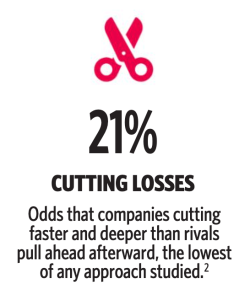
The pattern compounds. More than a third of the executives said their major initiatives had been undermined by decisions made with incomplete context, and nearly three in ten said the change had been treated as something technical rather than something organizational. More than a third reported that performance challenges or missed targets were what triggered the call for help in the first place, which is to say that the work began only once the clock had already moved, only once the race was, in effect, already lost. None of these are capability gaps. They describe a structural blind spot: the conviction that the organization can read its own pace clearly, set against the evidence that it has been watching the wrong number the whole way.
The figure the trade press loves to cite is the long-quoted claim that the overwhelming majority of well-formulated strategies fail somewhere in execution. It has been repeated so often that it has begun to feel like wallpaper. The sharper truth is that these strategies do not lose the race at the finish. They lose it in the splits, in the leading indicators that would have shown the pace falling off while there was still road left to correct it, and that were never on the runner’s watch at all.
Pace and the Clock
There is a discipline that begins by correcting exactly this. Within the Elixirr group, the work starts not with the time an enterprise posts but with the pace that produces it, and with a deliberate separation of the two into distinct measurement loops that are made to speak to each other.
The first is the external value loop. This is the finish clock everyone already reads: growth, margin, and cash, paired with the slower-moving indicators of lived experience, such as customer loyalty and the share of a customer’s spend that the enterprise earns over time. It is the loop the market sees and the board reviews, and there is nothing wrong with it except that, like any finish clock, it posts the result only after the race that determined it has already been run.
The second is the internal capability loop, and it is the one almost no one is watching. It is the runner’s pace and form: the cycle time from signal to decision, the engagement of managers and teams, the rate at which people are actually adopting new ways of working, first-year retention, quality at the source, and how often the organization is forced into exceptions rather than operating as designed. These are the splits. They determine, miles in advance, what the finish clock will eventually show.

The relationship between the two loops is the entire argument of this feature. By the time the external value loop posts a problem, the internal capability loop has been signaling it for a long while.
As Katerin Le Folcalvez, an Insigniam and Elixirr partner, puts it, “If we track only top and bottom-line outcomes, we actually overlook the mechanics that shape them.” The capability loop is where the mechanics live. An enterprise that publishes a small set of those leading indicators, makes them visible to everyone, and holds itself accountable for moving them is an enterprise that can correct its pace while there is still race left to run, rather than reading the bad news off the clock when the line is already behind it.
This reframes what an operating model is for. Insigniam describes a future-ready model as having three characteristics, each of which is really a way of running the race rather than staring at the clock. It is experience-led, designed backward from the outcomes the enterprise intends to create for customers, employees, and partners, rather than forward from internal convenience. It is culture-powered because the behaviors and norms of the organization have to match the model being installed or they will quietly reject it. And it is dynamically governed, with decision rights pushed to the edges where the information is freshest, so that the signal-to-decision cycle stays short and the pace stays honest. A cost program leaves all three of these untouched. It moves the clock and changes nothing about the runner, which is precisely why the savings so reliably return.
The reason organizations keep sprinting at the wrong line is not foolishness. It is gravitational. Insigniam names four forces that hold a legacy model in place: corporate gravity, which pulls every initiative back toward the familiar; the organizational immune system, which instinctively rejects what threatens the status quo; a lack of innovation thrust, which lets transformation stall; and corporate myopia, the fixation on near-term results that makes the loud, lagging number feel more real than the quiet, leading one. Of the four, corporate myopia is the most direct explanation for the wrong finish line. The cost target is near, visible, and crossable. The real race is long and unmarked. Under pressure, leaders run at the line they can see. As Insigniam has observed, the only thing more dangerous than an outdated operating model is the illusion that it is still working.
A Tale of Two Runners
The cost-as-finish-line mistake is easiest to see in two companies that ran it in full public view, by different routes and to the same end.
The first ran it through the budget. When 3G Capital took control of Kraft Heinz, it installed a discipline of zero-based budgeting that became, for a time, the most admired cost machine in consumer goods, and it posted a spectacular early split. The method drove the company’s margins to the best among its peers. What it did underneath that number was quieter and slower. The relentless foc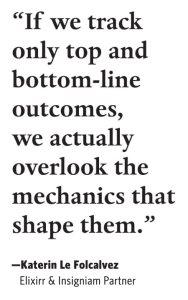 us on cost starved the brands of money for marketing, research, and innovation, burning the very reserves that let a runner sustain a pace.
For a few years, the clock looked magnificent. Then the runner hit the wall. In 2019, the company disclosed a $15.4 billion writedown on the Kraft and Oscar Mayer brands, and the admired margins themselves had quietly collapsed, falling from 27.2 percent in 2015 to 23.2 percent in 2018. One analyst named the lesson with cold economy, observing that best-in-class margins stop mattering if the sales growth never comes.
The incoming chief executive then said the obvious thing aloud, redirecting the company toward organic growth and arguing that efficiency had to matter more than cutting. The cost program had crossed every line it aimed at. Not one of them was the finish.
The second ran it through the payroll and cut something more vital. In 2007, still profitable and still competing hard against Best Buy, Circuit City looked at its sales floor and saw a line item. It dismissed roughly 3,400 of its most experienced, highest-paid sales associates and moved to replace them with cheaper hires, a decision projected to save tens of millions a year. The finish clock moved at once. Costs fell, and the stock even ticked up on the news. But those veterans were never a cost. In high-ticket electronics, they were the product, the reason a customer chose Circuit City over a warehouse club, and their knowledge walked out the door with them. Service on the floor collapsed, and when the downturn arrived, the company had no expertise and no loyalty left to lean on. It filed for bankruptcy the following year and was liquidated months after that. Circuit City did not cut waste. It cut the runner’s legs, then wondered why the pace fell off.
Set against these two stands a different kind of runner, the one profiled in the case study alongside this feature. Facing the same disruptive pressure, a leading wealth-management firm refused the knife and rebuilt how its leaders work instead, then measured whether the new model was taking hold rather than how much it had spent. The contrast is the whole argument. The cutters watched the clock and crossed a line that turned out not to be the finish. The redesigner watched its pace and kept running the race that had no line at all.
The Question AI Forces
There is a contemporary reason this matters more in 2026 than it did even a year ago, and it has to do with what happens when artificial intelligence is pointed at a performance problem.
AI is an amplifier of the operating model, not a substitute for it. When the model is crisp, automation accelerates the creation of value. When the model is unclear, automation accelerates confusion, and it does so at a speed no human review can easily catch. An organization that runs AI at the wrong finish line does not escape the trap. It reaches the line faster. The technology will now make cost-reduction decisions more quickly and more confidently, off the same lagging clock that was already misleading the humans. The question is no longer whether to use AI in performance management. It is the race you point it at. Aim it at the finish clock alone, and it will optimize a result that has already happened, with breathtaking efficiency. Aim it at the splits, at the leading indicators of capability, and it can correct the pace long before the time is ever posted.
This is the difference between two interventions that are easily confused and rarely the same. Cost-cutting takes people out of broken work. Redesign takes broken work out of people. The first sprints to a line. The second changes the race.
What This Means for You
If you are holding a strategy you believe in and a set of results that will not cooperate, the honest first question is not how to cut faster or govern harder. It is whether you are running at the real finish or a painted one, and whether you are watching the clock or your pace. The finish clock you trust was built to post outcomes, and it does that job faithfully. It was never built to tell you, with a mile still to run, that your stride was falling apart, and it will not start now because you are staring at it harder.
The work begins by tracking your splits: a small, visible set of leading indicators drawn from the capability loop, owned by everyone, and treated as the early-warning system they are. If the signal-to-decision cycle is stretching, your pace is telling you where it hurts. If first-year retention is climbing while rework and exceptions fall, your culture is translating into performance well before the clock says so. These are uncomfortable things to measure, because they are produced by choices that leaders made and rarely named as choices. They are also the only things that reveal a problem while there is still road left to fix it.
The executives who will outperform over the next five years are not the ones with the most aggressive cost programs or the most elaborate dashboards. They are the ones who stop sprinting at a false finish line and start running the race in front of them, the one with no single line across it, the one that rewards the runner who manages pace and form over the one who empties the tank for a marker on the road. Their competitors will still be celebrating at the wrong line, hands on knees, watching the costs they cut come jogging back up behind them.