
Wealth & Asset Management’s Defining Shift
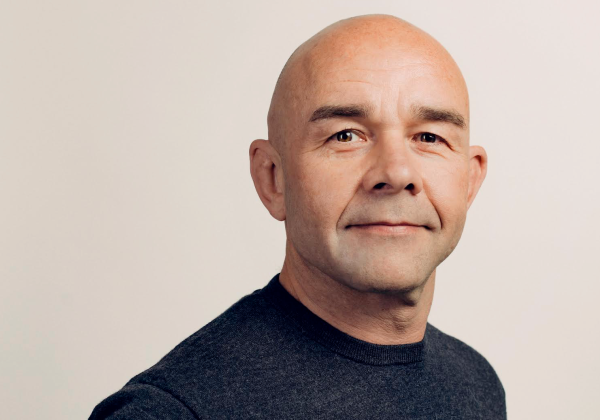
Executive Perspective: John Goddard, CEO, Quilter Cheviot

John Goddard is CEO of Quilter Cheviot, where he sets the firm’s strategy and its commitment to helping clients navigate life’s opportunities and challenges. With nearly 30 years in financial services focused on the Ultra-High and High-Net-Worth markets, and prior leadership roles at HSBC across Europe, the Middle East, and Asia, he brings a client-first lens to technology. His perspective connects technology, client relationships, and operating discipline, showing how the design of a business determines whether AI becomes a decisive, trusted, and scalable advantage.
IQ: How are you turning data and AI into more decisive action—and what has been most effective in making that shift real across Quilter Cheviot?
Mr. Goddard: We want to ensure that our use of AI is effective for both our business and our clients, which means being purposeful about prioritizing where it is deployed. We have focused on use cases where AI can materially reshape economics, client experience, or risk outcomes, rather than spreading effort thinly across dozens of experiments. That means concentrating on high-impact areas such as unlocking capacity for financial planners and investment managers by simplifying day-to-day tasks, improving front-office productivity, and lowering the cost-to-serve.
Beyond broader adoption within financial planning, we have deployed tooling to colleagues across the organization, allowing them to self-identify opportunities with strong use cases in client servicing, marketing, and investment administration. The key is to offer training, spark curiosity, and then put in place mechanisms for cross-pollination and best practice sharing. Both streams of AI activity, we believe, will allow the technology to flourish within our business.
Properly equipping and training colleagues will let the best use cases emerge naturally, and we can then scale what works through shared learning.
IQ: What strategic choices are critical for strengthening your growth position in a more concentrated market?
Mr. Goddard: In the medium term, we see structural tailwinds: rising engagement, policy nudges that encourage investment, and scalable advice reform. But there is a plausible longer-term inflection point where threats such as AI-led commoditization, price pressure, and new entrants could outweigh those forces.
The sensible response is to build the capabilities that let you win in both worlds: where we extend, into scalable tiers where AI can expand access, and where we defend, high-touch, high-trust propositions where human judgment and accountability remain decisive. The differentiator is whether you can own the entire journey, not just one product tier.
IQ: Where is the greatest opportunity to enhance client outcomes through AI-enabled advice and human judgment?
Mr. Goddard: The biggest opportunity sits below full advice, helping mass affluent and lower-confidence clients engage earlier, make better first decisions, and build momentum. AI makes it possible to deliver scalable guidance and targeted support without losing consistency or quality. But AI does not flatten client needs.
As wealth and complexity rise, trust gates become harder to clear. That is why we design around a simple principle: AI handles the automation and humans own the last mile. AI will do more of the work, but the judgment remains with humans.
In practice, this means using AI for data capture, modeling, monitoring, and alerts, while humans handle the moments that matter: life events, volatile markets, complex trade-offs, and legacy decisions.
In those moments, human touch becomes both a risk control mechanism and an outcomes engine. Done well, AI increases access while improving outcomes. Done poorly, it creates trust and conduct risk at both the industry and individual brand level. Regulation, as a result, has a crucial role to play.
IQ: How are you evolving your model to remain relevant to next-generation, high-net-worth clients?
Mr. Goddard: Inter-generational wealth transfer is a significant long-term force, but it creates risks as readily as it creates growth. It can generate leakage if assets fragment, beneficiaries switch providers, or clients redirect wealth into other uses. The firms that win will be those that engage beneficiaries earlier and build propositions that reflect different expectations and behaviors. People should not mistake next-generation clients for those who want a fully digital service. They are not asking for less human advice. They simply expect less friction and more relevance. What this creates is a bigger prize than product share: a lifetime relationship across generations, where value is earned at the moments that matter most. Responsiveness, supported by both humans and AI, can provide reassurance at precisely the times it is needed.
IQ: How does a 40-to-50-year retirement reshape wealth management?
Mr. Goddard: It changes almost everything. The systems and propositions this industry developed were built on assumptions about how long a retirement would last. Those assumptions are increasingly obsolete, and firms that continue to operate on them are building risk into their client relationships without fully acknowledging it.
A client arriving at 65 is not planning toward a fixed endpoint. They may be planning for a period as long as the career that preceded it, which changes the investment strategy, the income planning, the drawdown mechanics, and the role of different asset classes at different life stages.
That is not simply a product question. It is a relationship question, and it demands a different kind of institutional commitment: one where
continuity, adaptability, and long-term trust are built into the proposition from the outset rather than added on later.
The firms best positioned to serve clients well across that arc will be those that have invested in the depth of relationship and quality of planning that make that long-term commitment genuinely possible.