
Governance Without Friction
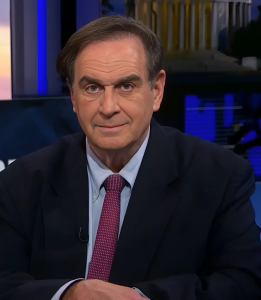
Jeffrey Sonnenfeld has spent much of his career studying how leaders make decisions under pressure. What concerns him today is not just the volume of challenges facing executives, but the overlooked role boards play in either protecting or depleting leadership capacity. Too many boards, he says, unintentionally pull managers into cycles of preparation, repetition, and ritual that sap the very energy needed to steer an enterprise through volatility. Governance, in other words, has become a hidden variable in organizational stamina—and speed.

Mr. Sonnenfeld’s view, sharpened across four decades of advising thousands of CEOs and directors, is not that boards are broken. It’s that too many boards are running on an operating system built for an earlier era—one in which the cadence of oversight could comfortably lag behind the cadence of the marketplace. That world is gone. Velocity has become the defining characteristic of organizational advantage, and governance has emerged as one of the most underestimated determinants of whether a company moves decisively or hesitates just long enough to fall behind.
“It has become a major challenge for the executive leadership of companies, but also for the boards,” Mr. Sonnenfeld says with characteristic directness. “Using the meetings a lot more effectively is a major way to curtail burnout.”
But if you listen closely, he’s not really talking about burnout. Burnout is simply the visible symptom—an organizational fever. The underlying diagnosis is governance drag: how boards structure their time, their conversations, their expectations, and their decision-making processes. What he is calling for is not merely care for exhausted executives, but a redesign of the board itself as an accelerator of clarity and strategic momentum. And behind that argument sits the central thesis of this article: the boards that thrive in the next decade will be the ones that learn to govern at the speed of strategy.
When the Board Slows the Enterprise
Conventional thinking tells us that boards exist to keep management in check, to guard against overreach, and to enforce discipline. There is truth in that. But as Mr. Sonnenfeld notes, the way boards pursue these aims often undermines the very outcomes they are charged with protecting. Oversight becomes overreach; scrutiny becomes suffocation; and meetings intended to sharpen strategy instead drain the oxygen from the room.
Nowhere is this more obvious than in what he calls the tyranny of the slide deck.
“Too many board meetings are consumed by encyclopedic PowerPoint presentations… the mind-numbing presentations go on so long that they consume so much of the meeting that board members get frustrated,” he explains. “They don’t really get to engage because they’re sitting there passively going through a very long presentation.”
The problem is not the content but the choreography. The instinct, he says, is often to hold information back until the meeting itself—as if governance were a theatrical performance in which the big reveal matters more than informed dialogue. “The instinct that a lot of executives have is to hold the information back as if there’s some big reveal,” he notes.
And then something predictable happens: directors become reactive rather than prepared, passive rather than curious. The meeting becomes a ritual of review rather than an engine of strategic synthesis.
For boards aspiring to accelerate the enterprise, this is lethal. Because speed—real speed, not haste—depends on context. And context requires preparation. When directors arrive flat-footed, the enterprise slows down, even if no one acknowledges it out loud.
Mr. Sonnenfeld’s remedy is both obvious and rarely practiced: distribute materials in advance, expect directors to do the homework, and use precious meeting time for genuine dialogue. “If you’re having people meet in a live session… have it be interactive and conversational,” he says.
This is not about courtesy. It is about cycle time. Every hour spent reviewing is an hour stolen from deciding. Every page of a 200-slide deck is a unit of cognitive fatigue that dulls the conversation that follows.
The Traditions That Trap Boards in Slow Motion
If the tyranny of the slide deck is the most visible form of governance drag, the tyranny of tradition is the most subtle.
Many board rituals were born in an era when governance reform was about independence—insulating the board from management, disciplining cronyism, and erecting bright lines around conflicts. Those reforms were important. But they also created new orthodoxies that, over time, hardened into unintentionally limiting practices.
Mr. Sonnenfeld points to the long-standing belief that only the CEO should sit on the board from management. “There’s no evidence that excluding other senior executives makes boards stronger… In fact, it deprives directors of hearing directly from the people closest to the issues,” he says.
The idea made sense when boards were trying to eliminate insider control. But today, it often deprives the board of essential operational texture. If boards wish to operate at speed, they must hear from the people who live closest to the data, the risks, and the customer.
And then there are the rituals that verge on the absurd. Mr. Sonnenfeld recounts a story about Coca-Cola, where new directors were told not to speak for their first year. Jack Welch, in characteristic fashion, refused to participate under those terms. It is easy to laugh at such an extreme, but quiet rituals of deferral persist in many boardrooms: senior directors dominating conversation; new directors waiting cautiously for permission to speak; rigid seating arrangements that freeze roles into place.
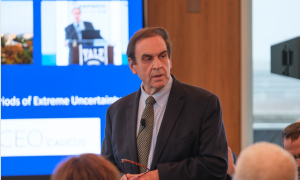
At one large Texas bank, he found a boardroom arranged in classroom rows. Directors sat in neat lines—passively facing the front, unable to see each other, unable to create a true conversation. After he suggested rearranging the room into a semicircle—eventually two concentric U-shapes—the dynamic shifted immediately.
“It sounds so trite, but the physical layout of rooms can make a big difference. Many times board members fall into routines of sitting in the same seats in the same places, and they fall into almost scripted roles,” he notes.
Real dialogue requires proximity. It requires eye contact. It requires directors being able to read the room—literally.
Boards that cling to tradition for its own sake often misinterpret ritual as discipline. But what they are really enforcing is inertia.
Recognizing the Alarm Bells of Governance Drag
Boards tend to assume that leadership fatigue shows up as dramatic collapse. But as Mr. Sonnenfeld cautions, exhaustion in the executive team and dysfunction in the boardroom usually surface as something quieter—something easier to miss.
“Sometimes a director or executive will wind up asking a question that’s already… pounded pretty thoroughly, and they just revisit where we just were. And you realize this person’s not paying attention,” he explains. Or worse: “They didn’t do their homework and they’re asking something that was pretty fundamental.”
These, he says, are not merely individual lapses. Rather, they are signals that the system is under strain. Fatigue masquerades as distraction. Burnout disguises itself as obsession with logistics. And confusion goes unspoken until whispered in hallways.
“Only talking in the hallways later… they’re confused because the dynamic was dysfunctional and nobody wants to look like a skunk in a lawn party,” he observes.
For a board aiming to operate at velocity, these are early warnings that clarity is eroding and decision quality is degrading. They are signs that governance is becoming a source of noise rather than signal.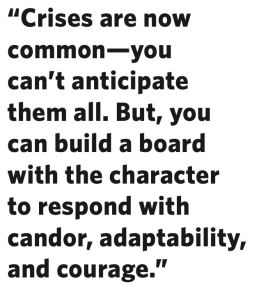
Breaking the Silence: Boards That Talk Move Faster
If there is one point Mr. Sonnenfeld returns to repeatedly, it is that directors must be allowed—encouraged, even—to speak to one another outside the performative setting of the meeting itself.
“They should feel very comfortable soliciting opinions outside of the board meeting. And if you have a management that doesn’t want you to do that, that’s a troubling sign,” he warns.
Information asymmetry is the enemy of velocity. Directors who cannot compare notes or consult independent experts cannot form the shared mental model that underpins fast, coherent decision-making.
Jack Welch once forbade his directors from speaking to each other outside formal meetings, for fear of factionalization. Mr. Sonnenfeld is explicit: this kind of isolation is toxic. Boards that cannot talk cannot govern.
Fast-moving organizations rely on alignment—both within management and between management and the board. That alignment cannot be manufactured once every ninety days. It must be maintained continuously, through conversations that clarify thinking and help directors pressure-test what they are hearing. Velocity requires cohesion, and cohesion requires conversation.
Technology as a Catalyst for Adaptive Oversight
When COVID-19 forced organizations to reimagine how directors interacted, many discovered that technology could do more than bridge geography—it could flatten hierarchy. Weekly CEO forums, open Q&A sessions, and virtual drop-ins created continuous visibility into the issues shaping the enterprise.
“A number of major consulting firms found that through COVID, having an ongoing forum with the boss remotely for anybody to ask anything is something they began to institutionalize later,” Mr. Sonnenfeld recalls.
Rather than reverting to old habits, he argues, boards should maintain these channels. They reduce reliance on quarterly meetings, prevent cognitive overload, and give directors a steadier grasp of how risks and initiatives are evolving.
Continuous context makes for faster decisions. Infrequent context forces the board to reconstruct months of complexity on the fly.
He offers a warning, however. If not handled with transparency, shifting dashboards can breed suspicion. “If there’s a long gap between meetings… and you see the charts relabeled with different benchmarks, you start to wonder if you’re being played,” he says.
The goal of technology is not for the sake of spectacle; it is continuity.
Character Still Counts: The Board as a Living Organism
No matter how well a board redesigns its meetings, its processes, its preparation expectations, or its use of technology, Mr. Sonnenfeld is adamant that these routines alone will never fully inoculate an organization against disruption. The world is too volatile, crises too varied, competitive threats too fluid.
“More the latter than the former… it has to be the character of the board more than the routine that insulates them from the unknown,” he says.
He notes that governance itself must be adaptive, drawing an analogy from Alexis de Tocqueville, who famously admired the “looseness” of American laws for enabling flexible interpretation.
“You can’t anticipate it all with tightly written scripts, but you can expect different categories of kinds of things happening and have a way of dealing with this kind of crisis,” Mr. Sonnenfeld advises.
Boards that govern at velocity possess three qualities: candor, adaptability, and courage. These cannot be mandated through charters; they are cultivated through culture.
BIO: Jeffrey Sonnenfeld Yale; Founder, CELI
Jeffrey Sonnenfeld is the Senior Associate Dean for Leadership Studies and Lester Crown Professor in Management Practice at the Yale School of Management, as well as founder and president of the Chief Executive Leadership Institute, a nonprofit educational and research institute focused on CEO leadership and corporate governance. He has advised the White House, U.S. State Department, U.S. Treasury Department, and Council of Economic Advisers on Russian economic sanctions and business retreats and has testified to the U.S. Congress; in addition, he has been profiled by various media outlets, including TIME, Bloomberg BusinessWeek, Washington Post, and Business Insider. BusinessWeek listed Sonnenfeld as one of the world’s 10 most influential business school professors, and Directorship magazine has listed him among the 100 most influential figures in corporate governance. He currently serves on the board of Lennar, a leading American homebuilder, as well as IEX, Atlas Merchant Capital, and the Ellis Island Honor Society.